
Defining Independent Artist: What DIY Really Means
What Is an Independent Artist? Valuing Integrity and Self-Worth
To me, an independent artist and rapper is someone who isn't afraid of doing things themselves and, crucially, isn't willing to compromise their integrity for something that isn't worth sacrificing their self-worth.
An independent artist is someone who hones many skill sets, trusts that the effort will pay off in the long or short term, and refuses to let barriers deter them.
We get the job done because it makes us happy, driven by the sole purpose of self-satisfaction.
Independent Artist Meaning: The Power of Permanent Ownership
When we look at the independent artist meaning, we find it lies in the power of ownership.
Being independent means we have the ability to call our own shots and are willing to put ourselves out there with the image and brand we create along the way.
Unlike signed artists who adopt a "handed image" because it sells to mass markets, an independent artist chooses the long and hard route of building a brand from the ground up.
It’s the difference between temporary clout and permanent ownership.
Defining the Independent Artist: The Multi-Hyphenate "All-in-One" Creator
Ultimately, what it means to be an independent artist is being the "all-in-one" creator who takes matters into their own hands to determine their own path.
It means you are the one turning a thought into a lyric and a beat, ensuring your voice hits the snare exactly how you intended.
While not every independent artist starts knowing how to mix, master, or distribute, it means being courageous enough to learn those skills or build the network necessary to get the finished product to the world on your own terms.
Stop struggling to “figure it out” and start building your legacy.
If you are tired of the hard route taking too long:
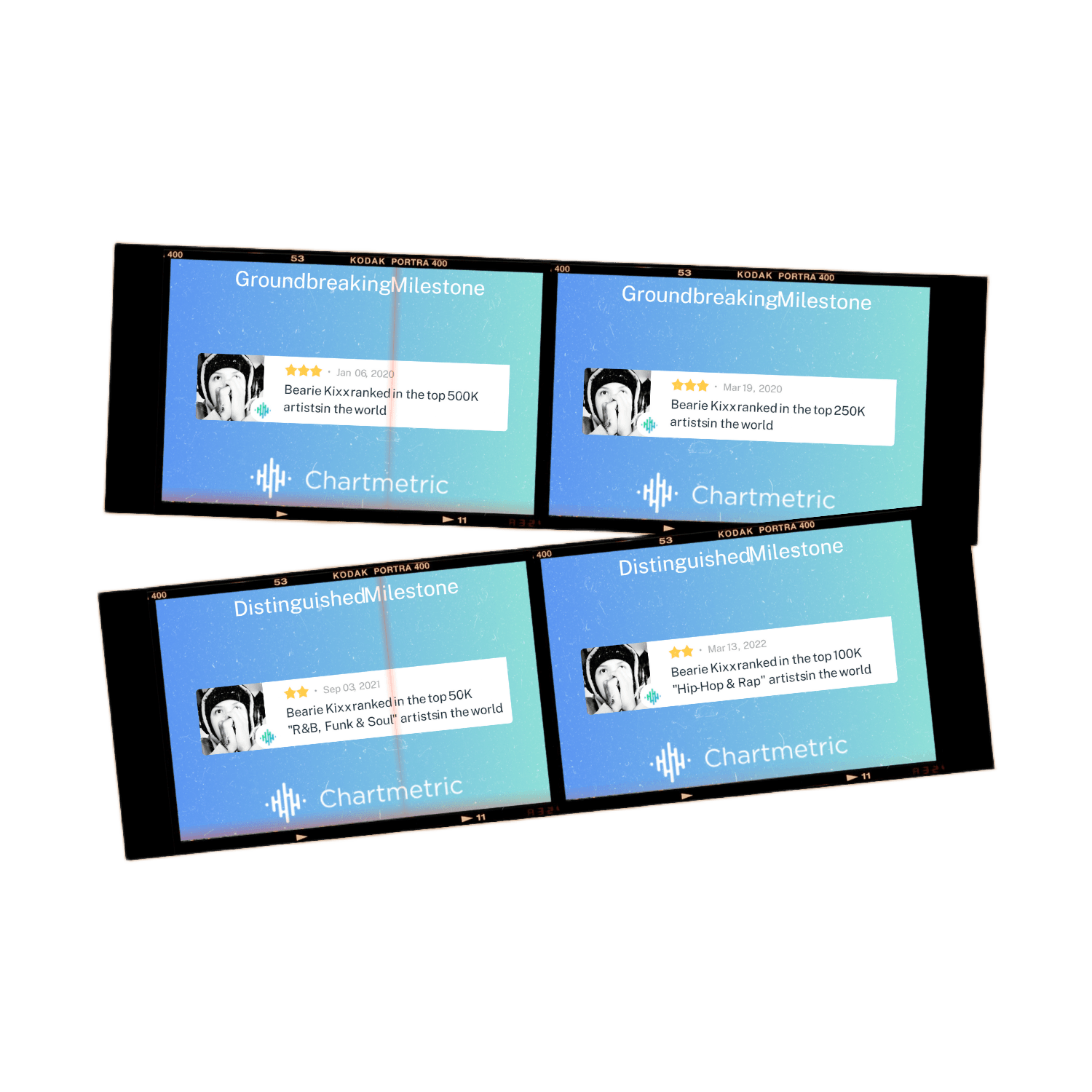
Bearie Kixx Groundbreaking and Distinguished Milestones from Chartmetric, as a Successful Independent Artist
The Independent Artist Start: Building a Brand from the Ground Up
We all start independently. We must sharpen our skill sets; no one else can do it for us.
There was no one there telling me what to say or how to compose a beat and lower the hi-hat on the eighth bar. It was me.
Being independent doesn't mean you're not ready; it just means you know what's best for you and your work. You know your worth.
The DIY Rapper: Why I Refused to Compromise My Lyrics and Image
When I released my first single, 'Like That,' everyone knew I could rap, but they didn't know I could make beats.
I kept that skill quiet because I wanted to be a "one of one" artist.
At age 15, labels were already approaching me. My own uncle, who had an independent label, once sent me a contract after I rapped on one of his beats.
I opened the email and sat in disbelief.
The contract said: "You will record the lyrics I write, and perform on these dates, wearing the clothes I provide." I laughed at the trash lyrics and told him, "I'm good." He replied back, "So you wanna DIY?"
I realized then that I wasn't willing to compromise myself.
He later told me, "Don't ever sell yourself for someone else. Your words, your work, your passion go into music."
The 1% Structural Pivot PDF: Online Presence Framework by Bearie Kixx, Founder of Hydrate Your Inner Artist
Know Your Worth: Building a Music Business and Digital Legacy
Since that conversation, I've read between the lines of every connection I've made.
An independent artist is the 'all-in-one,' but it takes more than grit and confidence, it takes structure.
You chose the hard route because you know your value. But knowing your worth isn't enough; you need the blueprint to back it up.
Independent artists come in various sizes with various skill sets. Define yourself, move forward, and use a system that removes the guesswork.
I’ve taken the lessons from my independent artist journey and built the home for the new era of creators.
Hydrate Your Inner Artist: A Proprietary System for Independent Success
Regardless of who you are and what you do.
HYiA was created to show you how to implement a repeatable system that can be used in any pursuit.
Turn your independent effort into ownership with Hydrate Your Inner Artist →
© 2025 Bearie Kixx | Privacy Policy | Terms & Conditions